
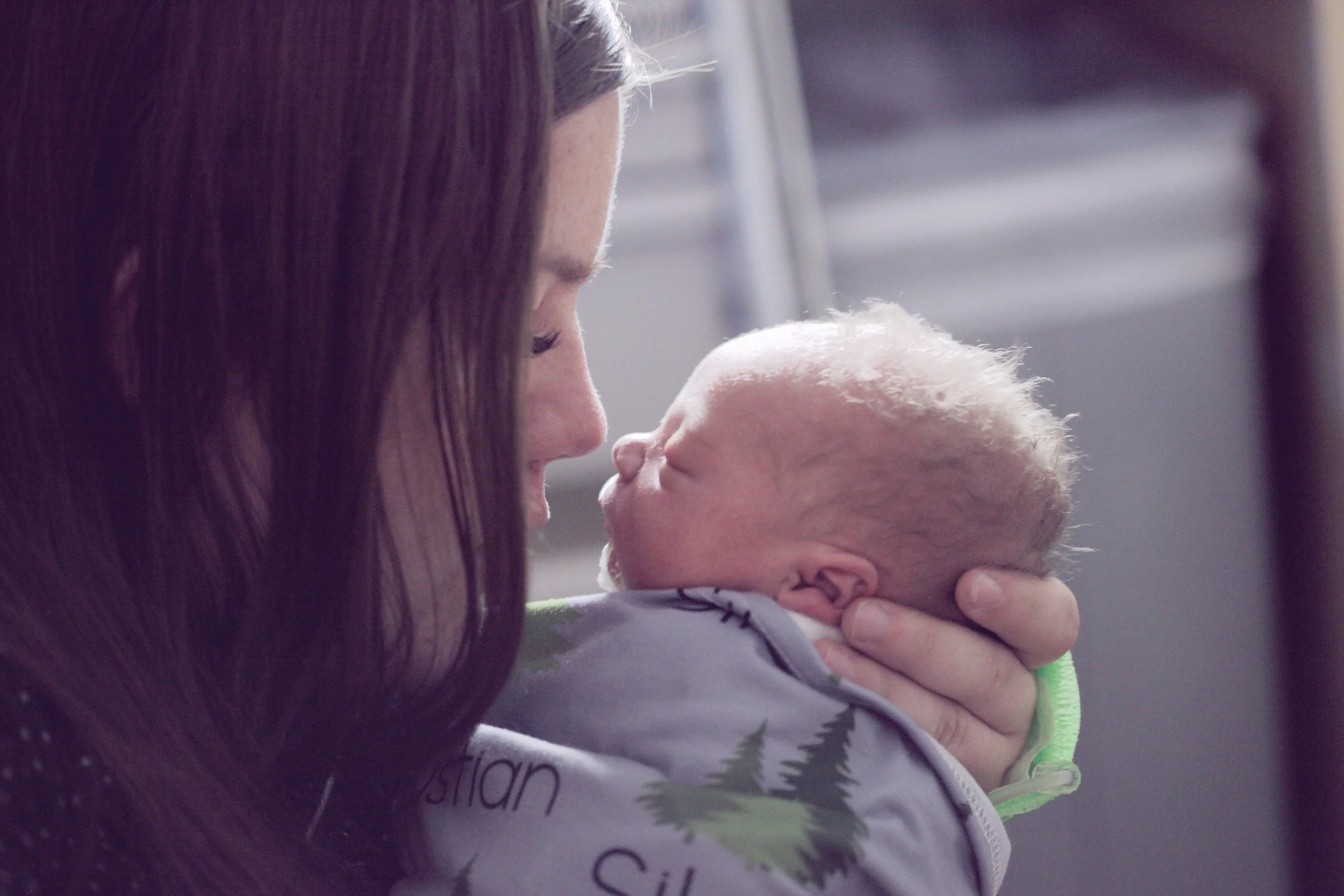
So many moms wait to reach out for postpartum therapy, thinking they need to hit rock bottom before anyone will care.
You might look at your life and tell yourself, I’m fine. You’re getting up, packing lunches, juggling work and baby snuggles, replying to texts, and moving from one thing to the next. To everyone else, it looks like you’ve got it together.
Inside, though, you feel different.
But on the inside, you feel more on edge, snappier, and a little lost compared to the old you. Maybe patience runs thin with your partner, and it’s almost impossible to wind down, even when the house is quiet and someone else has the baby.
You might not see yourself in the classic images of postpartum depression or anxiety. Maybe you are not crying all day, or struggling to get out of bed. You still dress your baby, answer emails, move through your routines.
Motherhood can land with a weight you never saw coming.
That feeling, by itself, is reason enough to reach for help.
Postpartum Therapy Is Not Only for Crisis
A lot of moms think therapy is only for when you’re falling apart, can’t stop crying, or can’t get out of bed.
Postpartum therapy can absolutely support those experiences, and they deserve care. But therapy can also help when the shift into motherhood has affected your mood, identity, relationship, anxiety, patience, or sense of self in ways that are harder to explain.
You might actually be the mom who looks like everything’s handled, but inside, you’re just trying to get through each day.
This might look like folding laundry with a racing heart, smiling at your partner while wishing you could hide in the bathroom for a moment, or holding your baby and feeling a little numb inside.
Therapy is a place where you can finally say out loud what’s changed and what you’ve been carrying since becoming a mom.
Signs Motherhood Is Affecting You More Than You Realize
Feeling overwhelmed in motherhood is common, but that does not mean you should ignore it.
You might start to notice:
feeling constantly on edge, even when nothing urgent is happening,
getting irritated by small questions, noises, or interruptions,
feeling resentful that your mind is always spinning with reminders and responsibilities,
struggling to rest because your mind keeps circling the next bottle, the next text to answer, the pile of laundry waiting in the basket,
feeling distant from your partner, even when you are not arguing,
missing the version of yourself who felt more grounded, confident, or connected,
feeling guilty for wanting space, help, or time alone,
feeling as if everyone else thinks you are fine, while you know you do not feel like yourself
These signs do not always mean something is seriously wrong. They often signal that your spirit has been carrying more than it can hold, and it’s time to set some of it down.
If it feels like your brain is always on, you’re not alone. That kind of invisible juggling act is what so many moms call the mental load.
When “Just Overwhelmed” Still Matters
Many mothers minimize what they are feeling by saying, “I’m probably just overwhelmed.”
Sometimes that may be true.
But if you’re running on empty most days, that matters.
If overwhelm is affecting your patience, sleep, mood, relationship, or ability to feel present, it is worth paying attention to. You don't have to wait until it becomes severe to get support.
Therapy can help you untangle what’s really draining you. Sometimes it’s anxiety. Sometimes it’s the slow burn of never getting a break. Sometimes it’s the loneliness of feeling like you’re the only one who remembers what everyone needs. Or maybe it’s just missing the old you, the one who existed before baby came along.
Often, it is a mix of several of these feelings at once.
Postpartum Anxiety Does Not Always Look Obvious
Postpartum anxiety does not always look like panic or constant fear.
For high-functioning moms, it can look like planning ahead, scanning for what might go wrong, needing to stay on top of every detail, or struggling to relax because your mind is always active.
You may find yourself checking schedules, replaying decisions, noticing small changes, or feeling uneasy when others do things differently than you would.
Because these habits look like responsibility, like always packing the diaper bag and always remembering the next appointment, they are easy for others to miss.
Internally, though, they can feel exhausting.
If you have been feeling like your mind never really slows down, you may want to read High-Functioning Postpartum Anxiety: When You Look Fine But Feel Anything But Fine.
Postpartum Therapy Can Help With Identity Changes
Having a baby shakes up who you are, inside and out.
You can be head-over-heels for your baby and still long for the version of you who felt more free. Maybe you miss your old routines, the quick coffee runs, laughing with friends, your energy, or just having a day where you didn’t have to plan every detail.
That grief can feel confusing because it exists alongside gratitude.
You can hold deep gratitude for your baby and still ache for the pieces of your life that feel far away now. You can pour yourself into your family and still wish for a little breathing room, a little time to chase your own dreams, or just a nap.
Therapy helps you sort out those feelings, without any judgment. There’s room for all of it: gratitude, grief, and everything in between.
If this feels familiar, The Version of You That Existed Before Kids Isn’t Gone. She’s Just Exhausted may help put words to it.

When Your Relationship Feels Different After the Baby
Motherhood can also affect your relationship in ways that are subtle at first.
You may feel like most conversations are about logistics. You may feel like you and your partner are managing the same household, but not connecting the way you used to. You may feel resentful that they can rest more easily while your mind is still tracking the next feeding, appointment, grocery order, or household task.
Your partner may be involved, caring, and trying, but you still feel alone in the weight you carry, as if you’re holding an invisible backpack that no one else can see.
That can be painful and confusing.
Postpartum therapy can help you understand what is happening in your relationship, what needs have gone unspoken, and how to communicate what you are carrying before it turns into another argument.
If your relationship has started feeling more practical than connected, you may also relate to When Your Marriage Starts Feeling More Like Logistics Than Connection.
When Irritability Is a Sign of Overload
Many moms are startled by how quickly their patience can snap after having a baby.
Sometimes a dropped pacifier or a partner’s harmless question can make you want to scream. The sound of cartoons, the constant requests for help, the sticky hands pulling at your clothes—everything piles up. By evening, your nerves feel frayed, and you wish for five minutes of silence.
Then the guilt shows up.
You may think you should be more patient or more grateful, especially if people are trying to help.
But this irritability is often your body’s way of waving a flag. It’s what happens when you are sleep-deprived, needed every hour, mentally juggling every doctor’s appointment, grocery run, and preschool pickup, and you never get a real moment to recharge.
Postpartum therapy can help you understand what is underneath the irritation instead of only judging yourself for the reaction.
You Can Be Doing Well and Still Need Support
This is the part many high-achieving moms need to hear.
You do not have to be falling apart to benefit from therapy.
You might organize playdates and cook dinner, but still collapse on the couch at night, wondering where your old self went. You can love your family fiercely, and still crave space to breathe. From the outside you may look steady, but inside something feels different now.
Therapy does not mean you cannot handle motherhood.
It means you are allowed to have support while you are handling it.
What Postpartum Therapy Can Help You Work Through
Postpartum therapy can support a wide range of experiences, including:
postpartum anxiety
irritability and anger
resentment toward your partner
mental load and invisible labor
mom burnout
guilt around rest or needing space
relationship changes after the baby
identity shifts in motherhood
difficulty communicating needs
feeling disconnected from yourself
The work is not about giving you another list of ways to improve. Most moms already have enough lists.
The work is about understanding what you are carrying, how it is affecting you, and what needs to shift so life feels more sustainable.
How to Know It May Be Time to Reach Out
It may be time to consider postpartum therapy if you keep telling yourself you are fine, but you do not feel fine.
You may also benefit from support if you feel like your anxiety, irritability, resentment, or emotional exhaustion is becoming part of your daily life.
You don't need the exact words for what is wrong before reaching out. Sometimes therapy is where you begin finding those words.
You might start with something as simple as:
“I’m functioning, but I don’t feel like myself.”
That is a valid reason to get support.
When to Seek Immediate Support
If you are having thoughts of harming yourself, your baby, or someone else, or you feel afraid of what you might do, please seek immediate support. Put the baby in a safe place if needed, call a trusted person, contact your medical provider, call 988 in the United States, or go to the nearest emergency room.
You deserve support right away. You don't have to wait or manage this alone.
Online Postpartum Therapy in Texas
Online therapy can be especially helpful for moms because getting support should not require adding more logistics to your week.
You do not have to commute, arrange extra childcare, or build your whole day around an appointment. You can meet from a private space at home, work, or wherever you have room to talk.
Balanced Minds Therapy offers virtual postpartum therapy for moms across Texas, including Austin, Houston, Dallas, San Antonio, and surrounding areas.
A Potential Next Step
I’m Sanah, a Licensed Professional Counselor who works with ambitious, career-driven moms navigating postpartum anxiety, burnout, mental load, resentment, and relationship stress after having a baby.
In my work, we focus on:
what has changed emotionally since becoming a mom
why you feel anxious, irritable, resentful, or unlike yourself
how mental load and identity shifts are affecting you
how motherhood is showing up in your relationship
how to communicate your needs without guilt or another argument
If you have been wondering whether you need postpartum therapy or whether you are just overwhelmed, you do not have to figure that out alone.
You can schedule a free 15-minute consultation through the link in my bio or on my website.
You can also learn more through my Postpartum Therapy page or Therapist for Moms page, depending on the kind of support you are looking for.
Frequently Asked Questions
-
You may benefit from postpartum therapy if overwhelm is affecting your mood, patience, relationship, sleep, or ability to feel like yourself. You do not need to be in crisis. If you are functioning on the outside but feeling anxious, resentful, disconnected, or emotionally exhausted inside, therapy can help.
-
Yes. Postpartum therapy can help with anxiety, irritability, burnout, mental load, relationship stress, identity changes, and the emotional adjustment to motherhood. You do not need a diagnosis of postpartum depression to deserve support.
-
Yes. Many moms feel unlike themselves after having a baby because their time, body, energy, relationships, and identity have changed. That experience is common, and therapy can help you understand what has shifted and how to reconnect with yourself.
-
Looking like you are doing well does not mean you are not struggling. Many high-functioning moms continue working, parenting, and managing daily life while feeling overwhelmed internally. Therapy can give you support before things become more severe.
-
Yes. Balanced Minds Therapy offers virtual postpartum therapy for moms across Texas, including Austin, Houston, Dallas, San Antonio, and surrounding areas. Support is focused on postpartum anxiety, burnout, mental load, relationship stress, identity shifts, and feeling more like yourself again.